
Quick Summary
A dishwasher can be hardwired or cord-and-plug connected, and Louisiana permits both, so the honest answer to whether you need an electrician is not about the method. It is about what sits behind the appliance: the circuit it lands on, the GFCI protection the code now requires, and the disconnecting means. Big Easy Electricians replaces and reconnects dishwashers across Orleans, Jefferson, and St. Tammany parishes, and in older kitchens the connection itself is rarely the problem. The problem is usually a circuit that was shared with the disposal decades ago, a junction box buried behind the cabinet, or a receptacle sitting where the code no longer allows it. Estimates are free, and it is worth having the circuit looked at before the new machine is delivered rather than after.
Last Updated: August 2026
On This Page
- Do You Need an Electrician to Hardwire a Dishwasher?
- Is Hardwiring a Dishwasher Allowed in Louisiana?
- Does a Dishwasher Need GFCI Protection?
- Does a Dishwasher Need Its Own Circuit?
- What Disconnecting Means Does a Hardwired Dishwasher Need?
- Can a Homeowner Do This Themselves in Louisiana?
- What Goes Wrong With a Dishwasher Connection?
- What Does the Job Involve in an Older New Orleans Kitchen?
- Frequently Asked Questions

Appliance delivery crews will usually connect a dishwasher that is already plugged in and decline one that is hardwired, which is how most people discover the question exists. The answer turns on the state of the circuit rather than on the machine, and that is something an electrician working across the New Orleans metro can establish in one visit.
Do You Need an Electrician to Hardwire a Dishwasher?
For the hardwired connection itself, yes in practice. It is permanent wiring inside an enclosure, it needs a proper disconnecting means, and it has to satisfy the GFCI requirement that now applies to dishwasher outlets. A delivery crew is not licensed to make that connection and will normally refuse it.
The wider reason is that a dishwasher swap almost never turns out to be a like-for-like connection in a kitchen more than twenty years old. The new machine has a different footprint, a different cord entry, and often a different amp draw, and the existing supply frequently predates the rules that now apply to it.
What is genuinely worth paying for is the survey rather than the ten minutes of terminating conductors. Knowing whether the circuit is shared, whether it is protected, and where the disconnect is decides whether this is a small job or a real one, and that is the same question that sits behind the choice between hardwired and plug-in appliances generally.
Is Hardwiring a Dishwasher Allowed in Louisiana?
Yes. Louisiana enforces the National Electrical Code through the Louisiana State Uniform Construction Code and is currently on the 2020 edition, which permits a built-in dishwasher to be permanently connected or cord-and-plug connected. Neither method is a compromise, and the manufacturer’s instructions can narrow the choice.
| Item | Hardwired | Cord and plug |
|---|---|---|
| Permitted in Louisiana | Yes | Yes |
| Disconnecting means | Breaker in sight or lockable, or a local switch | The plug itself |
| GFCI protection | Required | Required |
| Receptacle position | Not applicable | In the space adjacent to the dishwasher |
| Cord length | Not applicable | 3 ft to 6.5 ft, plug face to rear of appliance |
| Future replacement | Electrician returns | Simpler, but the next machine still has to suit the circuit |
| Delivery crew will connect it | Normally no | Normally yes |
Where the code is specific is on the cord version rather than the hardwired one. A built-in dishwasher connected by flexible cord takes a grounding-type attachment plug, the cord runs from three feet to six and a half feet measured from the face of the plug to the plane of the rear of the appliance, and the receptacle has to be in the space adjacent to the one the dishwasher occupies.
That last clause is the one that catches renovations. A receptacle in the cabinet behind or beneath the machine, rather than in the neighboring cabinet, is a common older arrangement and is not what the current rule describes. Code editions also move, and the 2023 edition has already been approved for a future Louisiana cycle, so the version in force on a given permit is worth confirming rather than assumed.
Does a Dishwasher Need GFCI Protection?
Under the code Louisiana now enforces, yes. GFCI protection is required for the outlet supplying a dishwasher in a dwelling unit, and the requirement does not depend on the connection method. A hardwired dishwasher is still supplied by an outlet, so hardwiring is not a route around it.
This is the single most common surprise on a dishwasher replacement in an older kitchen, because a machine installed before the requirement existed is usually sitting on an unprotected circuit and nothing about the kitchen looks wrong. The protection is normally added at the breaker, or at a receptacle upstream where the arrangement allows it.
It is also the requirement people most want to argue with, because a new GFCI device on an old circuit sometimes trips. That is worth understanding rather than defeating: a device that trips is usually detecting real leakage in an aging appliance or a damp connection, and the answer is to find it. The same logic applies to a kitchen receptacle that stops working for no obvious reason.
Does a Dishwasher Need Its Own Circuit?
Usually it should have one, and the manufacturer’s instructions often require it outright. What is not permitted is putting the dishwasher on the kitchen small-appliance branch circuits, because those are reserved for the countertop and wall receptacles they were installed to serve.
Sharing with a disposal is the arrangement people ask about most. It is sometimes acceptable and often not, and the deciding factors are concrete:
- The combined nameplate load of both appliances against the rating of the breaker
- Whether either manufacturer requires an individual circuit, which many now do
- Whether the circuit also serves anything else, which quickly runs into the loading limits
In practice a dedicated circuit removes all three questions at once and removes the nuisance tripping that a shared kitchen circuit produces on the days it matters most. Where the panel has no room to add one, that is a separate conversation about capacity, and it is the point at which adding dedicated circuits for heavy appliances stops being an appliance job.
What Disconnecting Means Does a Hardwired Dishwasher Need?
A hardwired dishwasher needs a way to be isolated for service, and how that is satisfied depends on the arrangement. A cord and plug is itself a disconnecting means, which is a large part of why the cord option is so popular in kitchen work.
A hardwired machine relies on the breaker or on a local switch instead, and the code is specific about that: the disconnecting means has to be within sight of the appliance, or the breaker has to be capable of being locked in the open position.
The practical consequence turns up later rather than at installation. Somebody servicing the machine in five years needs to isolate it, and if the only means is a breaker in a panel with a directory card that no longer matches the house, that service call becomes longer and more expensive than it needed to be.
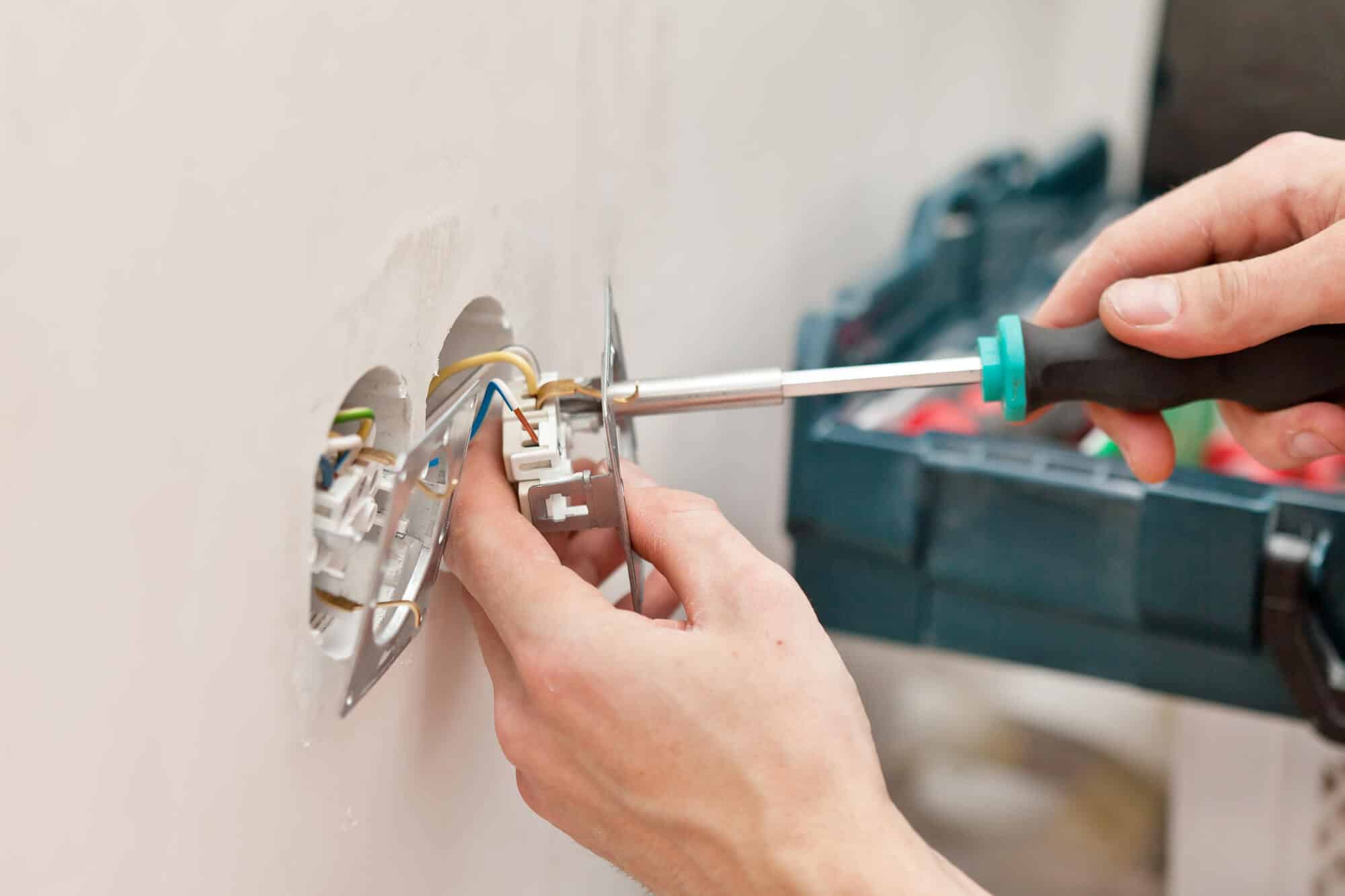
Labeling the breaker properly at the time of the work is the cheapest part of the whole job and the part most often skipped. It costs a few minutes and it is the difference between a future electrician finding the circuit in thirty seconds and tracing it room by room.
Can a Homeowner Do This Themselves in Louisiana?
Plugging in a dishwasher that already has a cord and a compliant receptacle is an appliance task. Making or altering the permanent wiring is electrical work, and it carries permit and licensing rules that vary between Orleans, Jefferson, and St. Tammany, so the parish is worth checking before assuming either way.
The risk in this particular job is not dramatic, which is exactly why it gets underestimated. A dishwasher connection sits in a damp enclosed space under a counter, next to a water supply, on a circuit that is now required to be GFCI protected, and the failure mode is a slow one rather than an immediate one.
There is a resale dimension as well. Kitchen appliance connections are visible during an inspection, and an unpermitted alteration to permanent wiring is the kind of item that surfaces at the least convenient moment. The general position on this is set out in why a licensed electrician matters in this market.
What Goes Wrong With a Dishwasher Connection?
The recurring faults are all about the environment rather than the wiring method. Under-counter space is warm, damp, tight, and full of things being pushed against the connection during every future service visit, and connections made without a proper enclosure do not survive that for long.
What turns up on service calls in this market:
- Splices made outside any box and tucked behind the toe kick
- A junction box buried behind cabinetry with no access, which is not permitted and is discovered only when something fails
- Conductors run without protection where a drawer slide or a water line can chafe them
- A receptacle sited in the dishwasher’s own cabinet rather than the adjacent one
- A shared disposal circuit sized without regard to both nameplates, which then trips when they run together
- Corroded terminations, which turn up often in this climate and on connections made without a proper enclosure
None of those are exotic, and all of them are cheaper to correct while the machine is out than after the new one is leveled and plumbed in. That window is the single best reason to have the circuit looked at during the swap rather than separately.
What Does the Job Involve in an Older New Orleans Kitchen?
More than the connection, usually. Kitchens in this housing stock have often been reworked more than once, and the supply behind a dishwasher can be original wiring, a later extension, or a run added during a renovation that nobody documented. The first task is establishing which.
A realistic sequence is to identify and label the circuit, confirm what else is on it, check the conductor size and condition at the termination, add or confirm GFCI protection, make the connection in an accessible enclosure, and confirm the disconnecting means. Where the circuit turns out to be shared or undersized, a new home run from the panel is the durable answer.
Where the panel itself has no spare capacity, the appliance job has just uncovered a service question, and it is better to know that during a kitchen project than during the next one. That is the same territory covered by new circuit and appliance installation work, and it usually pairs with receptacle work elsewhere in the kitchen while the crew is on site.
Frequently Asked Questions
Is a hardwired dishwasher better than a plug-in one?
Neither is better electrically. A cord and plug makes future service and replacement easier because the plug is its own disconnecting means, while a hardwired connection is tidier and is sometimes what the manufacturer’s instructions call for.
Can a dishwasher share a circuit with a garbage disposal?
Sometimes, and only when the combined nameplate load fits the breaker, neither manufacturer requires an individual circuit, and nothing else is on it. A dedicated circuit removes all of those questions and the nuisance tripping that comes with sharing.
How long is a dishwasher cord allowed to be?
Under the code Louisiana currently enforces, three feet to six and a half feet, measured from the face of the attachment plug to the plane of the rear of the appliance, and the cord must end in a grounding-type plug.
Where does the dishwasher receptacle have to be?
In the space adjacent to the space the dishwasher occupies, which is why a receptacle inside the dishwasher’s own cabinet is a common older arrangement that no longer matches the rule.
Why does my new dishwasher trip the GFCI when the old one never did?
The old machine was probably not on a protected circuit at all. A device that trips is usually detecting genuine leakage somewhere on the circuit or in the appliance, so the useful response is to find the source rather than remove the protection.
Does a dishwasher need a permit in New Orleans?
Swapping an appliance onto an existing compliant connection is different from altering permanent wiring, and permit rules differ by parish, so it is worth confirming with the local authority before the work rather than after.
Can the delivery crew connect a hardwired dishwasher?
Generally not. Delivery and haul-away crews will usually connect a machine that plugs into an existing receptacle and will decline a hardwired connection, which is why the electrical question is best settled before the delivery date.
Have the Circuit Checked Before the Machine Arrives
The connection is the small part of a dishwasher job. The circuit behind it, the protection on it, and the way it can be isolated are what decide whether this is straightforward or whether the kitchen has been carrying an old compromise. Big Easy Electricians checks all three before quoting, and the estimate is free. Call 504-226-7555 or describe the kitchen on the contact page, including the make of the new machine, since the manufacturer’s instructions often settle the circuit question on their own. Anyone planning a wider kitchen project should read what to settle before any electrical work starts, since the circuit question is usually the one that decides whether a kitchen project runs to schedule.