
Quick Summary
Most complaints about whole house surge protectors come down to four things: the device quietly reached end of life and nobody noticed, it was never the only path a surge could take into the house, it was installed with long leads that raised the voltage it lets through, or it was asked to handle a sustained overvoltage it was never built for. One of those is the device reaching the end of a life it was designed to have, one is a limit on what any service device can do by itself, and two come down to how the installation was put together. Big Easy Electricians fits and checks surge protection across Orleans, Jefferson, and St. Tammany parishes, where a storm season running from June into November and a distribution network exposed to wind and tree contact both put work through this equipment. Estimates are free, and a protector with a dark status light is worth looking at before the next warning goes up.
Last Updated: August 2026
On This Page
- Why Do Whole House Surge Protectors Fail?
- How Do You Know If a Whole House Surge Protector Has Stopped Working?
- Does a Whole House Surge Protector Stop a Lightning Strike?
- Why Do Devices Still Get Damaged With a Protector Installed?
- Can a Whole House Surge Protector Be Installed Wrong?
- Is Surge Protection Required on Louisiana Homes?
- How Long Does a Whole House Surge Protector Last Here?
- What Should Be Done After a Storm or a Nearby Strike?
- Frequently Asked Questions
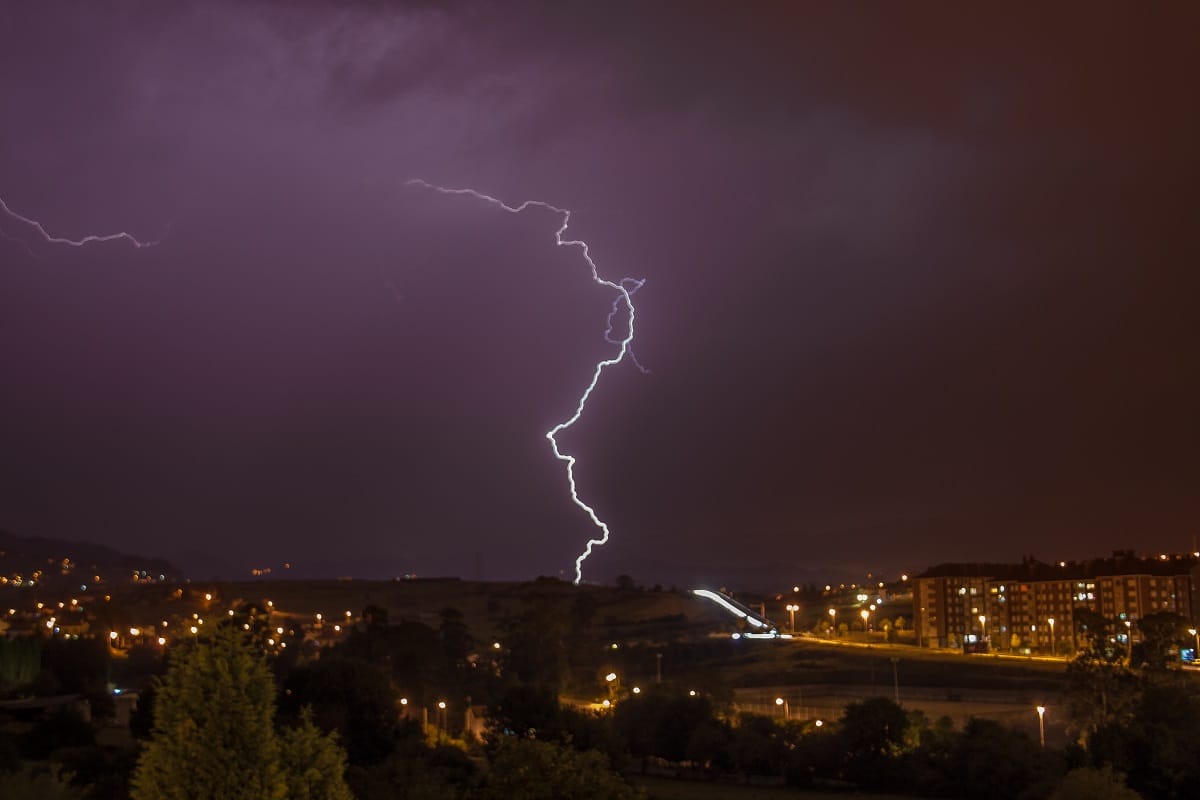
A whole house surge protector is a consumable part wearing out on a schedule nobody tracks, sitting in a panel nobody opens. That is the root of nearly every problem with them. The device is genuinely effective while it is healthy, and it gives almost no signal when it stops being healthy, which is why the questions below come up so often to electricians working across the New Orleans metro.
Why Do Whole House Surge Protectors Fail?
They wear out. The suppression components inside absorb a small amount of damage from every surge they divert, and after enough events they can no longer clamp properly. This is designed behavior rather than a defect, which is why the industry treats these devices as consumable protection rather than permanent equipment.
Two very different failure patterns produce the same outcome:
- Gradual degradation, where hundreds of small everyday transients slowly consume capacity until the device is exhausted
- A single large event, where one nearby strike or a serious utility disturbance takes the device out in one go
| What went wrong | What you would notice | What it actually means |
|---|---|---|
| Gradual degradation | Status light changed, nothing else | The device absorbed its last surge and is used up |
| One large event | Status light changed after a storm | It did its job and ended its life doing it |
| Sustained overvoltage | Device damaged, sometimes visibly | A utility fault or lost neutral held an abnormal voltage |
| Long installation leads | Equipment damaged with a healthy device | More voltage reached the house than the rating suggests |
| Another path into the house | Coax or data equipment damaged | The panel device never saw that surge at all |
Sustained overvoltage is the other well-known way these devices are destroyed, and it is a different thing from a surge. A transient lasts microseconds. A utility fault or a lost neutral can hold an abnormally high voltage on a circuit for seconds or minutes, and a device engineered to shunt a brief spike will overheat trying to hold that. Along the Gulf coast, where storm damage to overhead distribution is routine, that scenario is not rare.
How Do You Know If a Whole House Surge Protector Has Stopped Working?
The status indicator is the signal most units give, and on many it is the only one. A steady green light generally means the device is still protecting, while a red or amber light or no light at all means it has degraded, reached end of life, or lost power to the indicator circuit.
That is the difficulty with this equipment. Some failures announce themselves by tripping the breaker feeding the device or by visible damage to the housing, but many do not, and a household can carry an exhausted protector through several storm seasons believing it is covered. Checking it takes seconds if the unit is mounted where the indicator is visible, which is a good argument for mounting it that way.
Better units add a dry contact or an audible alarm, and some newer models will report status to a monitoring system. Where a unit is buried inside a panel with the dead front on, the status check has to be scheduled rather than noticed, and it fits naturally into a periodic inspection of the service equipment rather than being remembered separately.
Does a Whole House Surge Protector Stop a Lightning Strike?
No, and this is the single largest misunderstanding about the equipment. A service-level device is built to divert transients that arrive on the utility conductors, including the induced surges from strikes nearby. A direct strike on the structure delivers energy on a scale a service device alone is not intended to handle.
The distinction matters in a market that records a lot of lightning. A great deal of storm-related equipment damage arrives as induced surges traveling in on wiring rather than as a bolt hitting the roof, and that is precisely the case surge protection is good at. It is the rarer direct strike, and the strike to a nearby tree or pole with a very close coupling path, that overwhelms it.
Structural lightning protection is a separate discipline with its own hardware, and it is a different conversation from what goes in the panel. Households that have already taken a hit usually need the wiring checked as well as the protector replaced, which is what post-strike electrical work covers, and the broader picture is set out in how lightning damage actually reaches household wiring.
Why Do Devices Still Get Damaged With a Protector Installed?
Because the panel is not the only door into the house. A service-level device protects the power conductors, and a surge can arrive just as easily on a coaxial cable, a satellite feed, a phone line, or a buried run out to a shed, detached garage, or pool equipment. Anything conductive entering the building is a potential path.
The other reason is let-through voltage. A service-level device is intended to limit the surge to a level the fixed wiring and heavy appliances can tolerate, which is not the same as a level a sensitive circuit board will survive. How much gets through depends on the surge itself, the device rating, and how it was installed. The design assumption is layered protection:
- The service-level device takes the bulk of the energy at the panel
- A point-of-use device at the equipment handles what gets past it
- Anything with a data or coax connection needs that line protected too, ideally bonded to the same grounding system
Bonding is the piece most often skipped, and it matters because these devices work mainly by holding conductors close to the same voltage rather than by tipping energy into the earth. Two protection devices referenced to grounds at different potentials can push a difference in voltage straight through the equipment between them, which is how a television survives the power surge and loses its cable input.
Can a Whole House Surge Protector Be Installed Wrong?
Yes, and the most common installation error is invisible once the cover is on: excessive lead length. The conductors between the device and the busbar add impedance during a fast surge, and every additional inch raises the voltage that reaches the rest of the house by a meaningful margin.
Manufacturer guidance from Eaton puts each inch of lead at roughly 15 to 25 volts of additional let-through, and other makers publish their own figures on different test bases, so treat it as an order of magnitude rather than a constant. Either way it means a tidy looking install with leads routed neatly around the perimeter of the panel can perform noticeably worse than a short, direct, untwisted connection that looks less elegant. Keeping the leads short and straight is not cosmetic advice.
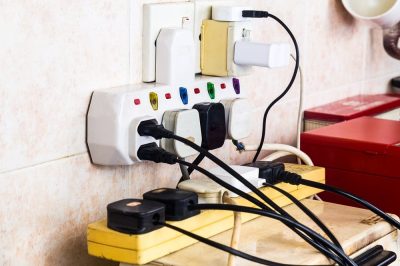
The other frequent problems are a device located downstream of where it should be, and a grounding electrode system that is corroded, undersized, or poorly bonded. A protector can only divert energy to a ground that will take it, so a marginal grounding system limits the whole installation. Panels with no room left for the device invite the same compromise from the other direction, because a protector squeezed into the only free position rather than the right one has its lead length decided by the enclosure instead of by the installer.
Is Surge Protection Required on Louisiana Homes?
Under the 2020 National Electrical Code, article 230.67 requires a Type 1 or Type 2 surge protective device on services supplying dwelling units, installed as part of the service equipment or immediately next to it. The requirement also applies where existing service equipment is replaced.
That last clause is the one that catches homeowners by surprise. Replacing a panel is not treated as swapping like for like, so a service upgrade brings the surge protection requirement with it whether or not the house has ever had one. Anyone planning panel work should budget for it as part of the job rather than as an upsell.
Adoption of code editions happens at the state and local level, so the version enforced on a given permit is worth confirming rather than assuming, and where an edition containing 230.67 is in force, new and replaced services get surge protection, and where it is not, the requirement is not automatic. The wider picture on which editions apply and why is covered in how electrical safety standards are updated and enforced.
How Long Does a Whole House Surge Protector Last Here?
There is no fixed service life, because the device ages by how much energy it has absorbed rather than by the calendar. In a market with a long storm season and frequent utility disturbances, a protector can be used up considerably faster than a manufacturer’s general expectation suggests.
Things that shorten it locally: a high count of thunderstorm days from late spring through hurricane season, overhead distribution exposed to wind and tree contact, repeated outage and restoration cycles that each produce their own transients, and salt air corrosion on grounding connections that quietly raises the impedance of the path the device depends on.
The sensible habit is to treat the status indicator as a maintenance item checked at least once a year, and always after a storm severe enough to knock out power on the block. Replacing an exhausted device is straightforward panel work. Discovering it was exhausted because the refrigerator, the air handler, and the television all failed in the same hour is the expensive version, and it is why surge damage keeps appearing among the repair calls that come in most often.
What Should Be Done After a Storm or a Nearby Strike?
Read the protector’s status indicator first, from outside the panel, before anything else is switched back on. A device that took a large hit may have done its job perfectly and ended its life doing it, and leaving it unchecked means the next event arrives at a house everyone believes is protected.
Anything involving heat, smoke, arcing, or a burning smell is a different situation entirely, and the response there is to leave the power off and call rather than to investigate. Beyond the device itself, a nearby strike or a hard utility disturbance is worth a wider look:
- Read the status light on the surge device and note whether it changed
- Check for breakers that tripped and note anything that will not reset cleanly
- Look and smell for signs of heat from a safe distance, without opening the panel or removing any cover
- Test GFCI and AFCI devices, which are themselves electronic and can be damaged by a surge
- Have the grounding connections checked, particularly older ground rods and water pipe bonds, which is licensed work rather than a homeowner task
Equipment that survived a surge is not necessarily undamaged. Partial damage to a power supply can shorten its life by months without producing an immediate failure, which is why a household seeing several unrelated devices fail in the weeks after a storm is usually looking at one event rather than coincidence.
Frequently Asked Questions
Can a whole house surge protector cause lights to flicker?
A healthy device does not cause flicker. Flickering that starts around the time one is installed usually points to a loose connection, a shared neutral problem, or a pre-existing service fault that the panel work simply brought to attention.
Does a whole house surge protector need its own breaker?
Most Type 2 devices connect through a dedicated two-pole breaker sized to the manufacturer’s instructions, and that breaker is also what allows the device to be isolated for replacement without pulling the service.
Is a power strip enough if the panel already has a protector?
They do different jobs. The panel device takes the large energy, and a good point-of-use device handles what gets past it, so sensitive electronics are better off with both rather than either alone.
Will homeowners insurance cover surge damage in Louisiana?
Coverage depends entirely on the policy terms, the exclusions, and the cause of loss, so the insurer is the only authority on that. Keeping a dated record of the event and of the equipment is worth doing regardless, because it is easier than reconstructing it later.
Can a surge protector be added without replacing the panel?
Usually yes, provided the panel has space for the breaker and the device can be mounted close enough for short leads. Where neither is true, the honest answer is that the panel is the constraint rather than the protector.
Do surge protectors work with a standby generator?
They do, and transfer operations can produce their own transients, so the position of the device relative to the transfer switch is worth deciding at design stage rather than after the generator is running.
How often should a whole house surge protector be replaced?
When the indicator says so, or when the manufacturer’s instructions call for it, rather than on a fixed interval, because two identical devices on the same street can be at very different points in their lives.
Have the Protector Checked Before the Next Warning Goes Up
A surge protector that has already done its work looks exactly like one that has never been needed, and in a market with this much storm activity that is not a safe assumption to carry into hurricane season. Big Easy Electricians checks status, lead length, grounding, and bonding as one job, and the estimate is free. Call 504-226-7555 or get in touch through the contact page to book a look. Anyone planning service work should read what a panel upgrade involves, since a replaced panel brings the surge requirement with it, and households wanting the background on where surges come from will find it in what causes power surges. The protective role the panel itself plays is covered in how circuit breakers limit electrical damage.