
Quick Summary
A refrigerator does not have to be on a dedicated circuit under the code Louisiana enforces. The rule puts refrigeration receptacles on the kitchen small-appliance branch circuits by default, and then permits an alternative: a receptacle serving a specific appliance may be supplied from an individual branch circuit rated 15 amperes or greater. So a dedicated circuit is optional rather than mandatory, and most electricians install one anyway because a shared kitchen circuit is the one that trips at Thanksgiving. Big Easy Electricians adds and traces these circuits across Orleans, Jefferson, and St. Tammany parishes, and in older kitchens the answer to what the fridge is actually on is usually not what the panel label claims. Estimates are free.
Last Updated: August 2026
On This Page
- Does a Refrigerator Need a Dedicated Circuit?
- What Does the Code Actually Say About the Fridge Circuit?
- Why Do Electricians Recommend One Anyway?
- Does a Refrigerator Receptacle Need GFCI Protection?
- What Size Circuit Does a Refrigerator Need?
- What Happens When the Fridge Shares a Kitchen Circuit?
- Does an Older Louisiana Kitchen Usually Have One?
- How Do You Find Out What Your Fridge Is On?
- Frequently Asked Questions
There is a difference between what the code requires and what a working kitchen wants, and this question sits exactly on that line. Getting the distinction right matters because it changes whether you are correcting a defect or making an improvement, and an electrician working across the metro should tell you which one you are buying.
Does a Refrigerator Need a Dedicated Circuit?
Not as a requirement. The code Louisiana enforces expects the receptacle serving refrigeration equipment to be on one of the kitchen small-appliance branch circuits, and separately permits a receptacle serving a specific appliance to be fed from an individual branch circuit rated 15 amperes or greater instead.
Both arrangements are compliant, which is why two competent electricians can give different answers to the same question and both be right. What separates them is judgment about how the kitchen is used rather than a dispute about the rule.
It is worth being clear about that, because the phrase people usually hear is that a fridge is required to have its own circuit. It is not, and a house without one does not have a code violation on that basis alone. What it may have is a nuisance waiting for the busiest cooking day of the year.
What Does the Code Actually Say About the Fridge Circuit?
Two or more 20-ampere small-appliance branch circuits are required to serve the kitchen, and those circuits serve the wall and countertop receptacle outlets and the receptacle outlets for refrigeration equipment. That is the default position and it is why so many refrigerators share.
The alternative sits in an exception that allows a receptacle outlet serving a specific appliance to be supplied from an individual branch circuit rated 15 amperes or greater. Two consequences follow from the way that is written:
- A dedicated fridge circuit does not have to be 20 amperes, since 15 amperes satisfies the exception
- The permission is not fridge-specific in current editions, so it covers other specific appliances as well
| Arrangement | Permitted | What it means in practice |
|---|---|---|
| On a 20 A small-appliance branch circuit | Yes, this is the default | Shares with countertop outlets, fine until the counter is busy |
| Individual circuit, 15 A | Yes, under the specific-appliance exception | Removes the shared-load risk entirely |
| Individual circuit, 20 A | Yes | Same benefit, with headroom if the kitchen is reworked |
| Sharing with a microwave | Permitted in some arrangements | A poor pairing, and the usual source of badly timed trips |
| On a general lighting circuit | No | The small-appliance circuits are required to serve it instead |
What the small-appliance circuits may not do is serve things outside the rooms and outlets the rule lists, which is the reason a dishwasher or a disposal cannot simply be added to one. That is a separate question covered in how dedicated circuits work for heavy appliances.
Why Do Electricians Recommend One Anyway?
Because of what a refrigerator is rather than what it draws. It is the one appliance in the house that must not lose power quietly, it runs unattended for weeks at a time, and its compressor starting current lands on whatever circuit it shares with everything else in the kitchen.
The scenario that makes the case is ordinary. A countertop full of appliances during a holiday meal, a circuit already near its limit, and a compressor cycling on at the wrong moment trips the breaker. Nobody notices, because nothing visible changed, and the failure is discovered the following morning.
A separate circuit removes that entirely, and it also removes the fridge from the consequences of every future kitchen appliance somebody plugs in. It is one of the few upgrades where the benefit is easy to describe without exaggerating it, which is why it appears so often among the repair calls that come in most often.
Does a Refrigerator Receptacle Need GFCI Protection?
It depends on where the receptacle is and what it serves. In a dwelling kitchen the GFCI requirement is written around receptacles installed to serve countertop surfaces, so a receptacle sitting behind the refrigerator and not available to the countertop is treated differently from one on the wall above the counter.
That distinction is genuinely contested in the field, and interpretations vary between inspectors and between code editions, so the answer for a specific kitchen is worth confirming with the authority reviewing the work rather than settled from a general article. The direction of travel across recent editions has been toward more protection, not less.
The practical worry people raise is a protected fridge circuit tripping and spoiling food while the house is empty. That is a real consideration for the location of the device rather than a reason to avoid protection where it is required, and it is worth discussing openly at the point the circuit is designed.
What Size Circuit Does a Refrigerator Need?
A domestic refrigerator is a modest cycling load with a brief heavy draw each time the compressor starts. Where it shares, it sits on a 20-ampere small-appliance circuit. Where it gets its own, the exception permits 15 amperes or greater, and many electricians fit 20 amperes regardless.
Fitting the larger circuit is not about the fridge needing it. It is about headroom and about the conductors already being in place if the kitchen is ever reworked. Note that a circuit installed under the specific-appliance exception is for that appliance, so a wine fridge or a beverage cooler acquired later is a new circuit rather than a spare outlet on this one.
What actually decides the size is the appliance nameplate together with anything else the circuit will serve. Guessing from the model name is not a method, and neither is copying whatever the previous owner installed, since that decision may itself have been a guess made decades ago.
What Happens When the Fridge Shares a Kitchen Circuit?
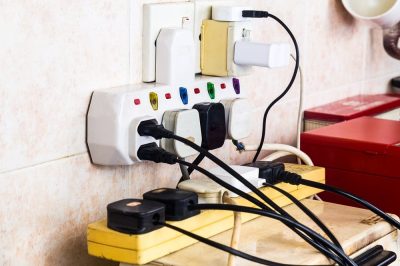
Usually nothing, for years. A refrigerator sharing with countertop outlets sits well within a 20-ampere circuit most of the time, and that is exactly why the arrangement survives in so many houses without anyone ever questioning it. The trouble only shows up when the countertop is busy.
The failure is occasional and badly timed, and it takes a recognizable shape:
- The trip happens when several countertop appliances run at once
- It repeats on the same occasions rather than randomly
- Nobody notices the fridge went off, because the kitchen lights are on a different circuit
- The discovery is a warm refrigerator hours later
A GFCI device that trips for its own reasons produces the same silent outcome, which is why the location of the protection matters. Where a circuit is already misbehaving, the useful first step is finding out why rather than adding load to it, and the reasoning behind that sits in how circuit breakers limit electrical damage.
Does an Older Louisiana Kitchen Usually Have One?
Frequently not, and the reason is chronological rather than careless. Requirements for kitchen small-appliance circuits have tightened over successive code editions, and a kitchen wired decades ago met the rules of its own era rather than the ones in force now.
What turns up regularly across the parishes is a single kitchen circuit doing work that two or three would do today, receptacles added during a remodel onto whatever run was nearest, and a refrigerator sharing with a countertop that now has four appliances on it instead of one.
None of that is automatically a violation, because existing installations are generally judged against the code in force when they were done. It does mean the kitchen is carrying assumptions from a different decade, and a remodel is the natural moment to correct them with new circuit installation work rather than another extension.
How Do You Find Out What Your Fridge Is On?
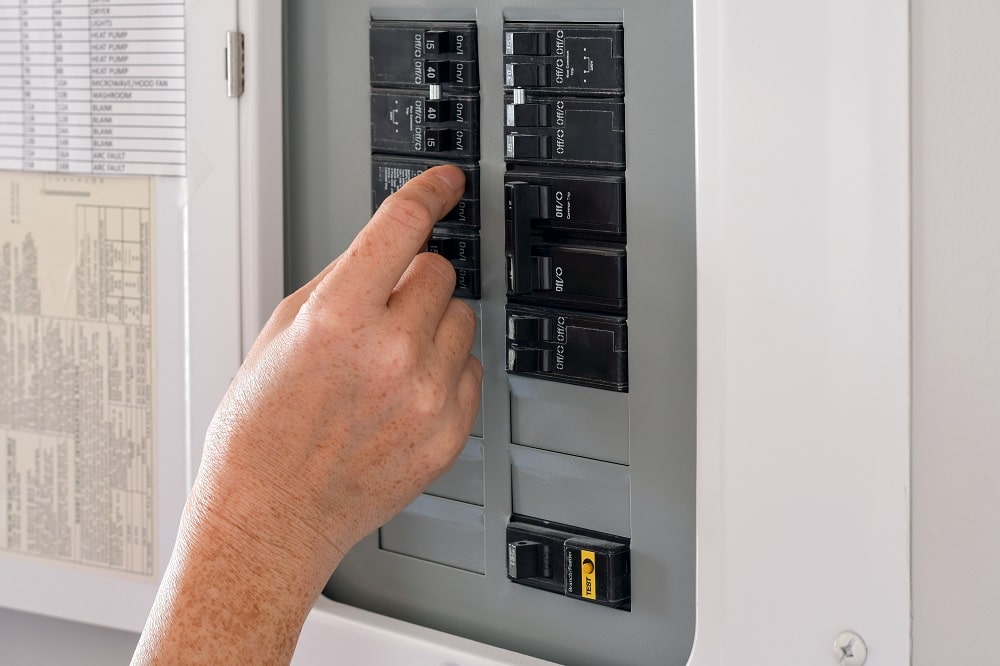
Not from the panel label, which in most older houses reflects the building as it once was rather than as it is. The usual method is to switch off one breaker at a time and record what goes dead, which takes about an hour.
It is not foolproof, because hardwired loads, multiwire circuits, alarms and anything not running at the time can all be missed, which is why the exercise rewards doing it carefully rather than quickly.
A workable sequence is to plug something audible or visible into the fridge receptacle, switch breakers one at a time, note which one kills it, then check what else on that circuit goes dead at the same moment. If the countertop receptacles drop with it, the fridge is sharing.
The output worth keeping is a corrected directory card in the panel door, because that is what turns every future electrical visit into a shorter one. If the exercise turns up several circuits doing more than they should, the question moves from the kitchen to whether the breaker box itself is right for the house, and from there to what a panel upgrade covers.
Frequently Asked Questions
Is it a code violation if my refrigerator shares a circuit?
Not on that basis alone. The rule places refrigeration receptacles on the kitchen small-appliance branch circuits by default and permits an individual circuit as an alternative, so sharing is a compliant arrangement rather than a defect.
Can a refrigerator be on a 15-amp circuit?
Where it is fed by its own circuit, the exception permits 15 amperes or greater, though many installers fit 20 amperes so the circuit has room for whatever the kitchen acquires later.
Can the fridge share with the microwave?
It is a poor pairing in practice even where it is permitted, because a microwave is a large intermittent load and the combination is what produces the occasional badly timed trip.
Will a dedicated circuit stop my fridge tripping the breaker?
It removes the shared-load cause. If the fridge still trips on a circuit of its own, the problem is the appliance or the circuit itself, and that needs measuring rather than another breaker.
Does a garage or second refrigerator follow the same rules?
Receptacles in garages carry their own protection requirements, so an extra refrigerator out there is a different question from the kitchen one and is worth asking separately.
How much disruption is adding a dedicated circuit?
It depends almost entirely on the route from the panel to the kitchen and on whether the panel has a spare space, which is why the assessment happens before any figure is quoted.
Can I just move the fridge to another outlet?
Only if that outlet is on a suitable circuit, and in most kitchens the nearby receptacles are on the same small-appliance circuits, so moving the plug moves the problem rather than solving it.
Find Out What the Kitchen Is Actually Carrying
The honest version of this answer is that a dedicated refrigerator circuit is an improvement rather than a correction, and it is worth having anyway in a kitchen that does real work. Big Easy Electricians maps what each kitchen circuit actually feeds, corrects the directory card, and quotes from that rather than from an assumption. The estimate is free. Call 504-226-7555 or describe the kitchen on the contact page, including whether anything trips and when, since the timing narrows the cause before anyone arrives. Households finding that receptacles cut out for no clear reason should start with what to check when outlets stop working, and anyone adding countertop outlets during a remodel will want receptacle installation work priced at the same time.