
Quick Summary
Yes, a hardwired dishwasher can generally be converted to a cord and plug, and it is a common request when a machine is being replaced or when the old one is impossible to isolate for service. What makes the conversion legitimate rather than improvised is the receptacle: it has to be in the cabinet space next to the dishwasher rather than behind it, the cord has to be a listed kit of the right length terminating in a grounding-type plug, and the circuit still has to carry the GFCI protection the code now requires. Big Easy Electricians does this work across Orleans, Jefferson, and St. Tammany parishes, and in older kitchens the receptacle location is what usually turns a small job into a slightly larger one. Estimates are free.
Last Updated: August 2026
On This Page
- Can You Put a Plug on a Hardwired Dishwasher?
- What Has to Be True Before the Conversion Works?
- Where Does the New Receptacle Have to Go?
- What Cord and Plug Does a Dishwasher Take?
- Does the Circuit Still Need GFCI Protection After the Conversion?
- Why Convert a Hardwired Dishwasher at All?
- When Is Converting a Bad Idea?
- What Does the Conversion Involve in an Older Kitchen?
- Frequently Asked Questions
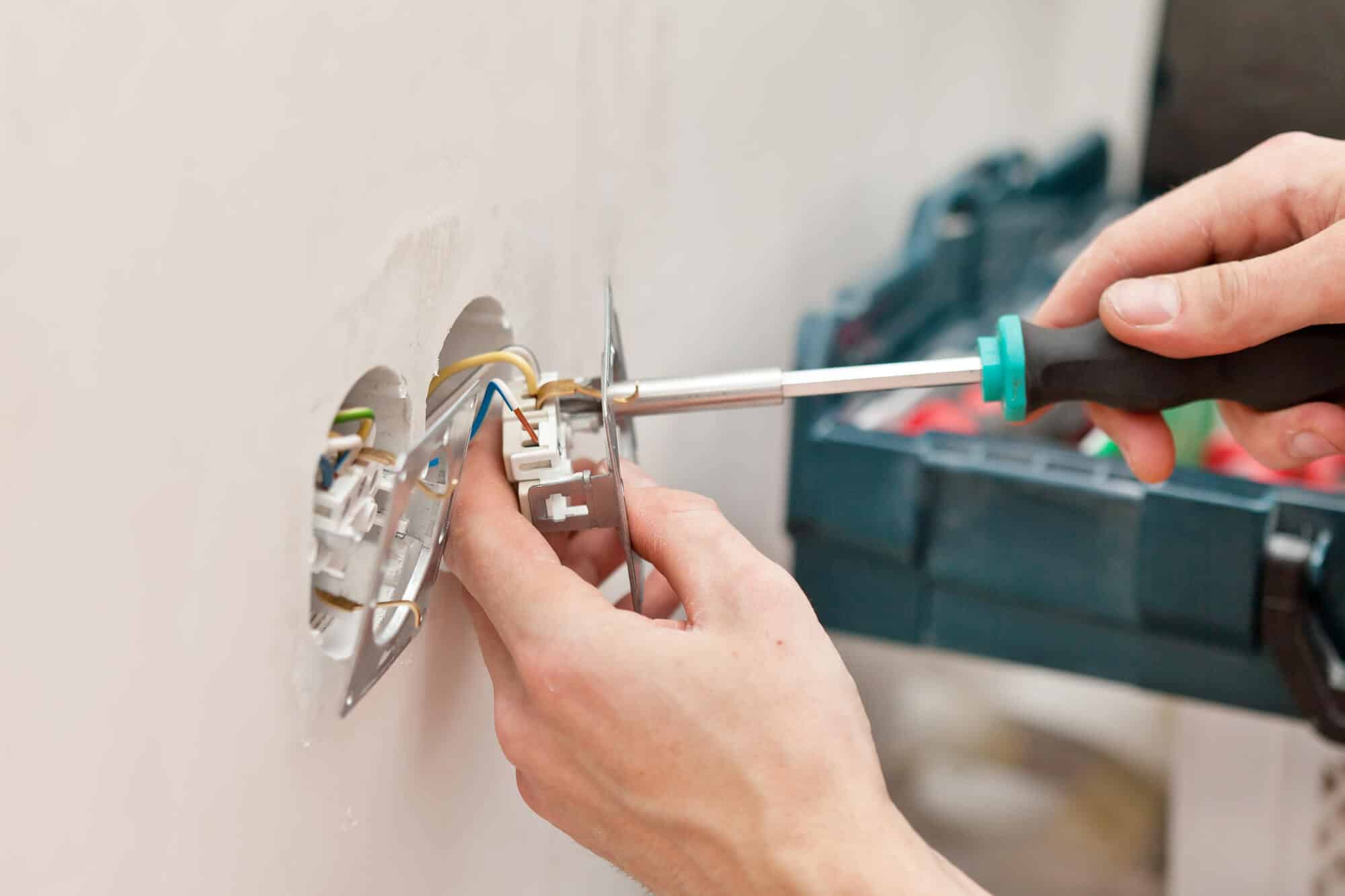
Almost everyone who asks this question is asking it for a practical reason rather than a technical one. They want the machine to be something a delivery crew will connect, or something that can be pulled out and shut off without hunting through a panel. Both are good reasons, and an electrician working across the New Orleans metro can usually do it inside one visit.
Can You Put a Plug on a Hardwired Dishwasher?
In most cases yes. The code Louisiana enforces permits a built-in dishwasher to be either permanently connected or cord-and-plug connected, so converting from one to the other is changing between two allowed methods rather than working around a restriction. The appliance itself rarely objects.
The two things that can block it are specific and worth checking first. The manufacturer’s installation instructions may call for a permanent connection on that model, and instructions carry weight rather than being advisory. And the appliance terminal box has to accept a cord connector properly, which most do and a few do not.
Everything else about the job is about the supply rather than the machine. A conversion done well is a receptacle installed in the right place on a circuit that is already correct, and a conversion done badly is a receptacle stuffed into whatever cabinet was nearest, which is how a lot of the older ones in this housing stock were done.
What Has to Be True Before the Conversion Works?
Three things, and none of them concerns the plug. The circuit has to be suitable for the dishwasher on its own terms, the outlet has to carry GFCI protection, and there has to be a receptacle in a permitted location. The cord is the last and easiest item on that list.
The checks that decide whether this is a short job:
- What else is on the circuit, since the kitchen small-appliance branch circuits are not available for a dishwasher
- Whether the conductor size and breaker match what the new machine’s nameplate asks for
- Whether protection already exists, at the breaker or upstream
- Whether there is an accessible cabinet space adjacent to the dishwasher to receive the receptacle
Where the existing supply is a shared circuit or an undocumented extension, the conversion is the moment to correct it rather than to build on top of it. That is often the real value of the visit, and it is the same underlying question as whether a heavy appliance needs a circuit of its own.
Where Does the New Receptacle Have to Go?
In the cabinet space adjacent to the space the dishwasher occupies, not in the opening the machine sits in. That is the detail that decides most of these jobs, because the obvious place to put a receptacle is directly behind the appliance and that is precisely the location the rule steers away from.
| Item | What the conversion needs | Common older-kitchen finding |
|---|---|---|
| Receptacle position | The cabinet space adjacent to the dishwasher | A receptacle behind the machine, or none at all |
| Cord | A listed dishwasher cord kit with a grounding-type plug | A lamp cord or an extension lead |
| Cord length | 3 ft to 6.5 ft, plug face to rear of appliance | Sized to the old 4 ft maximum |
| GFCI protection | Required on the outlet either way | Circuit unprotected, because it predates the rule |
| The circuit | Suitable for the dishwasher on its own terms | Shared with a disposal, or an undocumented extension |
| Connection enclosure | Accessible after the work | Splices behind the toe kick or buried in cabinetry |
The practical reasons behind it are easy to see once the machine is out. A receptacle behind the dishwasher is unreachable without pulling the appliance, sits in the path of the water lines, and is in the warmest and dampest part of the cabinet run. Next door under the sink or in the neighboring base cabinet is reachable, drier, and serviceable.
In older kitchens the adjacent cabinet is frequently a sink base with a disposal, a waste trap, and a filter already in it, so siting the box takes a moment of thought rather than a drill and a hope. This is ordinary receptacle installation work, and doing it properly is what separates the conversion from a workaround.
What Cord and Plug Does a Dishwasher Take?
A listed dishwasher cord kit terminating in a grounding-type attachment plug, not a lamp cord and not an extension lead. Under the code Louisiana currently enforces the cord runs from three feet to six and a half feet, measured from the face of the plug to the plane of the rear of the appliance.
The six and a half foot figure is worth knowing because it is more generous than people expect. Older editions of the code allowed a maximum of four feet, and plenty of advice still circulating repeats that number, which occasionally leads to a cord that is technically shorter than it needed to be and a receptacle sited awkwardly to suit it.

What is not acceptable is an extension cord, a multi-way adapter, or a cord passing through a cabinet wall without protection. Under-counter space moves every time somebody services the machine, and a cord that is chafing against a drawer slide or a hot water line is a problem that develops quietly over years.
Does the Circuit Still Need GFCI Protection After the Conversion?
Yes. GFCI protection applies to the outlet supplying a dishwasher in a dwelling unit regardless of whether the machine is hardwired or plugged in, so converting to a cord does not create or remove the requirement. If the existing circuit is unprotected, the conversion is the moment to fix that.
Most older kitchens in this market are unprotected on that circuit, simply because the machine was installed before the rule applied to it. Nothing about the kitchen looks wrong and nothing has failed, which is why it usually comes as news during an appliance swap rather than during an inspection.
If the newly protected circuit starts tripping, treat that as information rather than as a fault with the device. A GFCI reacting on an old kitchen circuit is often detecting genuine leakage in an aging appliance or a damp connection, though a wiring error, a shared neutral, or a failed device are all possible too, so the point is to find the cause rather than to remove the protection. The same reasoning applies to kitchen receptacles that stop working with no obvious cause.
Why Convert a Hardwired Dishwasher at All?
Serviceability, mostly. A plug is its own disconnecting means, so the machine can be isolated by pulling it rather than by finding the right breaker in a panel whose directory card stopped matching the house years ago. That saves time on every future visit, not just this one.
The other reasons that come up repeatedly:
- Appliance delivery crews will connect a plug-in machine and will normally decline a hardwired one
- A future replacement is simpler, though the next machine still has to suit the circuit and its own instructions
- Pulling the machine to reach a leaking supply line no longer means killing a circuit blind
- The connection ends up in an accessible enclosure rather than buried behind cabinetry
None of those is about safety directly, and together they are why the conversion is worth doing when the machine is out anyway. Doing it as a standalone job later means pulling the dishwasher a second time for the same work.
When Is Converting a Bad Idea?
When the manufacturer’s instructions call for a permanent connection, when there is no permitted location for the receptacle without opening up cabinetry, or when the existing circuit is the real problem. In that last case the conversion just puts a tidy plug on a supply that needed replacing anyway.
The situation worth being most careful about is a kitchen where the dishwasher supply turns out to be spliced into something else, run in undersized conductors, or fed from a circuit that also serves the countertop receptacles. Converting to a plug does nothing about any of that and can make it look resolved.
Where the panel has no spare capacity to give the kitchen a proper circuit, the appliance question has uncovered a service question. That is better discovered during a kitchen project than during the next one, and it moves the conversation to what a panel upgrade covers rather than to cords and receptacles.
What Does the Conversion Involve in an Older Kitchen?
More carpentry judgment than electrical work, usually. The machine comes out, the existing hardwired connection is opened and assessed, the circuit is identified and labeled, a receptacle is installed in the adjacent cabinet, the cord kit is fitted to the appliance, and protection is confirmed or added.
What tends to add time in this housing stock is what is found once the machine is out: splices sitting outside any enclosure, a junction box buried behind cabinetry with no access, corroded terminations that humidity here produces faster than a dry climate does, or conductors run where a drawer slide has been rubbing them.
All of those are cheaper to correct in the same visit than to revisit, which is the practical argument for doing the electrical assessment during an appliance swap rather than treating them as separate errands. Where a fault is already showing itself, it belongs with repair work on existing circuits instead.
Frequently Asked Questions
Can I use an extension cord for a dishwasher instead?
No. A dishwasher takes a listed appliance cord kit of the correct length terminating in a grounding-type plug, and an extension cord is not a substitute for it under any arrangement.
Can the receptacle go behind the dishwasher?
The rule places it in the space adjacent to the one the dishwasher occupies, so behind the machine is the location to avoid, and it is also the least serviceable spot in the cabinet run.
Will converting to a plug void the appliance warranty?
It depends on the manufacturer’s installation instructions for that model, which is why those are read before the work rather than after, since some models call for a permanent connection.
Does the plug count as the disconnecting means?
A cord and plug generally serves as the means of isolating the appliance for service, which is one of the main practical reasons people ask for the conversion in the first place.
How long should the dishwasher cord be?
Between three feet and six and a half feet under the code Louisiana currently enforces, measured from the face of the attachment plug to the plane of the rear of the appliance rather than end to end.
Can this be done without pulling the dishwasher out?
Not realistically. The existing connection is at the rear of the machine and the new receptacle goes in the neighboring cabinet, so the appliance comes out either way, which is why the swap is the natural time for it.
Is a converted dishwasher treated differently at inspection?
It is judged on the same items as any other installation: the location of the receptacle, the cord type and length, the protection on the circuit, and whether the connection is accessible rather than buried.
Get It Converted While the Machine Is Out
The conversion itself is short. What makes it worth doing properly is everything it exposes, because the space under a dishwasher in an older kitchen is where the shortcuts of previous decades tend to be hiding. Big Easy Electricians checks the circuit, the protection, and the receptacle location together, and the estimate is free. Call 504-226-7555 or send the model details through the contact page, since the manufacturer’s instructions often answer the permanent-or-cord question outright. Households weighing the two methods against each other will find the comparison in the difference between hardwired and plug-in installations, and anyone whose kitchen circuits trip regularly should start with choosing the right breaker box before adding anything to them. The habits that keep a kitchen out of trouble generally are covered in preventing everyday electrical hazards.