
Quick Summary
The cost of a 100-amp to 200-amp electrical panel upgrade in the New Orleans area is driven far more by the condition of the service entrance than by the panel itself, which is why two houses on the same street can get very different numbers for what sounds like the same job. Big Easy Electricians handles panel upgrades across Orleans, Jefferson, St. Tammany, Tangipahoa, and St. John the Baptist parishes, and quotes the work only after seeing the meter base, the service entrance cable, and the grounding electrode system. Every panel upgrade in Orleans Parish requires an electrical permit from the City of New Orleans Department of Safety and Permits and an inspection before the meter is released. Homes still carrying a Federal Pacific Electric Stab-Lok or Zinsco panel are a separate case, because many insurers treat those as a coverage problem rather than a preference. Estimates are free, and an on-site assessment is the only thing that produces a real figure.
Last Updated: August 2026
Big Easy Electricians works on panel upgrades throughout New Orleans and the surrounding parishes, where the housing stock runs from pre-1950 shotgun doubles still carrying knob-and-tube circuits to 1960s and 1970s Jefferson Parish construction wired in single-strand aluminum. Both conditions change what a panel upgrade involves, and both are why a phone quote for this work is usually wrong. The panel is the cheapest part of the job.
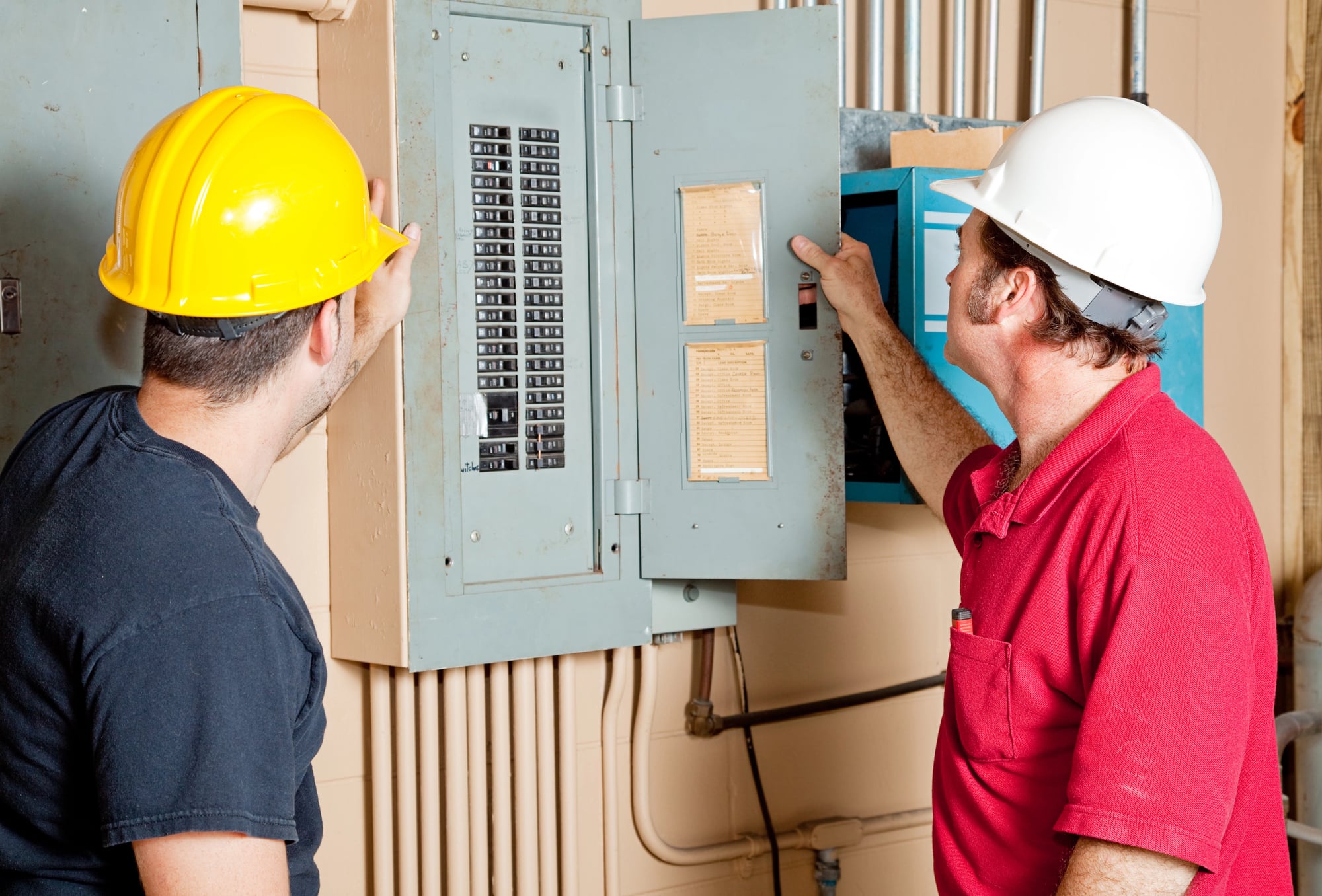
How Much Do Electricians Charge for a Panel Upgrade?
There is no standard price, because the panel is the smallest part of the job. What an electrician charges depends on whether the service entrance cable, meter base, and grounding electrode system can be reused or have to be replaced, and on whether the panel is being relocated. Only an on-site assessment produces a real figure.
The panel itself is a small share of the total. Most of the invoice is labor, the permit and inspection, and whatever part of the service entrance has aged out. A house whose meter base and cable are sound is a very different job from one where the service has to be rebuilt from the weatherhead down.
What actually drives the number on a New Orleans house:
- Whether the existing service entrance cable is rated for 200 amps or has to be replaced from the weatherhead down
- Whether the meter base is sound, since a corroded base in a coastal humidity environment is common and is not optional to fix
- Whether a grounding electrode system exists and meets current requirements under NEC Article 250
- Whether the panel is being relocated, which happens often when the original sits in a closet or bathroom where current code no longer permits it
- Whether Entergy has to reset the service drop, which adds scheduling time rather than a large cost
- Whether the circuits landing in the new panel need arc-fault or ground-fault protection they did not previously have
That last item catches people out. Moving to a new panel is the moment when protection requirements that did not exist when the house was wired become relevant, and the breaker count can shift the total more than the panel did.
How Do I Know If My Electrical Panel Needs to Be Upgraded?
The clearest signals are a panel physically full with no space for another circuit, breakers that trip under normal household load, scorch marks or a burning smell at the panel, and any fuse box still in service. Age alone is not a fault, but a full panel past 30 years usually holds a house back.
Load is the quieter reason. A house wired for 100 amps in 1962 was not designed around a heat pump, an induction range, a car charger, and a home office. Adding any one of those can push a service that was adequate for decades past what it can carry, and the symptom is nuisance tripping rather than anything dramatic.
A panel that is genuinely at the end of its life usually shows more than one of these at once. A single tripping breaker is more often a circuit problem than a service problem, which is worth separating before anyone quotes a panel. Homeowners who are seeing repeat trips on one circuit rather than across the house are usually looking at a fault that tracing the circuit back to its source will find faster and far more cheaply than a service upgrade would.
Is a 100-Amp Panel Still Up to Code?
Yes, in most cases. A 100-amp service that was properly installed and remains in sound condition is not automatically a code violation, and nothing in the National Electrical Code requires a homeowner to upgrade simply because the service is small. What the Code governs is whether the service is adequate for the calculated load of the house it serves.
This is the single most common misunderstanding about panel upgrades. An inspector is not going to red-tag a functioning 100-amp panel on sight. The obligation arrives when the load calculation for the dwelling exceeds what the service can supply, or when the panel is modified, relocated, or replaced, at which point the current adopted Code applies to that work.
Louisiana’s code position is worth knowing here. The edition enforced statewide is the 2020 National Electrical Code as amended, adopted by the Louisiana State Uniform Construction Code Council with an effective date of 1 January 2023. The council approved language moving to the 2023 edition in July 2026, but a newer edition being published does not make it enforceable, so work permitted now is judged against the 2020 NEC unless the permit office handling it says otherwise.
Which Electrical Panel Brands Are Uninsurable?
Federal Pacific Electric Stab-Lok panels and Zinsco panels are the two most commonly refused by home insurers, along with certain Challenger and Pushmatic equipment depending on the carrier. The concern in both cases is documented evidence that breakers can fail to trip on an overcurrent, which defeats the one job the breaker exists to do.
Neither brand is prohibited by the National Electrical Code, and an inspector will not necessarily require removal. The pressure comes from the insurance side instead, and it is real: carriers in Louisiana routinely decline new policies, refuse renewal, or apply a surcharge on homes carrying them. Individual carriers differ, so the only reliable answer for a specific house is the carrier’s own underwriting position.
Both were installed heavily in the decades that produced a great deal of the metro area’s current housing, so they turn up regularly in Jefferson Parish and in Orleans Parish alike. A panel bearing an FPE or Zinsco label is worth identifying before a policy renewal rather than after one, because the replacement then happens on the homeowner’s schedule instead of an underwriter’s. The wider case for replacing an ageing service, including what a modern load center changes about day to day safety, is covered in more depth in this look at what a newer service actually buys a household.
What Happens If You Upgrade a Panel Without a Permit in New Orleans?
Unpermitted panel work in Orleans Parish creates three problems at once. The utility will not release the meter without a passed inspection, the work becomes a disclosure item when the property sells, and an insurer can contest a claim traced to electrical work nobody inspected. The City of New Orleans Department of Safety and Permits issues these permits.
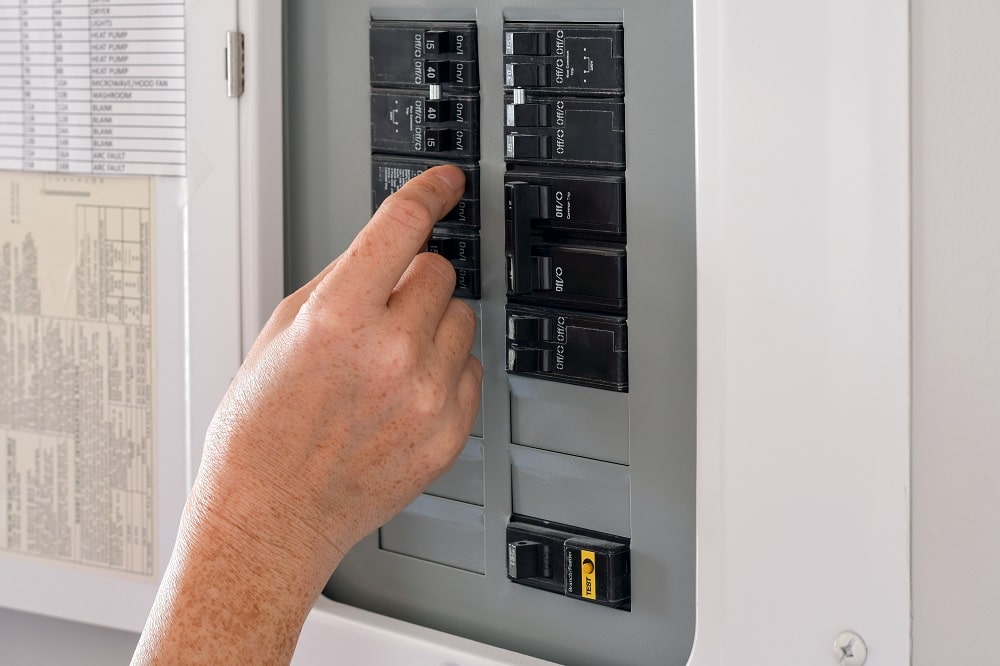
The meter release is the part that stops a job dead. A panel swap involves pulling the meter, and the utility will not reconnect a service that has not cleared inspection, so an unpermitted upgrade can leave a house without power rather than merely out of compliance. That sequencing is why permitting is treated as part of the job here rather than paperwork bolted on afterwards.
Outside Orleans Parish the office changes but the principle does not. Jefferson Parish handles Metairie, Kenner, Harahan, River Ridge, and Gretna, and St. Tammany Parish covers Covington, Mandeville, and Slidell. Louisiana does allow a property owner who physically performs work on their own residence an exemption from contractor licensing, but that addresses who may do the work, not whether it needs a permit and an inspection.
Can You Upgrade an Electrical Panel Without Rewiring the House?
Usually yes. A panel upgrade and a whole-house rewire are separate jobs, and most homes take a new 200-amp service on their existing branch circuits without the walls being opened. The panel, the service entrance, and the grounding are replaced while the circuits already in the walls are landed on new breakers.
The exception matters in this market. Where the branch circuits themselves are the problem, a new panel does not fix them, and two conditions in particular come up locally:
- Knob-and-tube wiring, the ceramic-knob and cloth-insulated conductor system installed from the 1880s through roughly 1940, which is ungrounded by design and turns up in pre-1950 shotgun doubles and camelbacks
- Single-strand aluminum branch wiring from mid-1960s to mid-1970s construction, which expands and contracts at terminations and needs listed CO/ALR devices or approved pigtail connectors rather than a new panel
In both cases a panel upgrade is still worth doing and is often the first stage, but it is honest to say up front that it improves capacity and protection without curing the branch wiring. Where a fuller replacement of the circuits behind the walls is the real requirement, sequencing the two jobs deliberately usually costs less than discovering it midway through a panel swap.
How Long Does a 200-Amp Panel Upgrade Take?
The physical work on a straightforward residential panel upgrade generally takes one working day, with power off for much of it. The calendar length is longer, because the permit precedes the work and the inspection and meter release follow it, which usually puts the whole sequence at one to two weeks.
A realistic order of events looks like this:
- Site assessment of the service entrance, meter base, panel location, and grounding
- Permit application to the parish or city office with the required documentation
- Utility coordination to schedule the disconnect and reconnect
- Panel and service entrance replacement, typically a single day with the power off
- Inspection by the authority having jurisdiction
- Meter release and the service restored
Steps two, five, and six are the ones outside any contractor’s control, which is why a promised same-week completion on a panel upgrade should be treated with suspicion. Anyone planning around the outage should also settle where the panel will finally sit, since relocating it out of a closet or bathroom is far cheaper as part of this job than as a second one later. Households weighing whether they need more circuit capacity rather than more service capacity may find the question is really about adding a second distribution point closer to the load, which is a smaller piece of work.
Does Upgrading to 200-Amp Service Increase Home Value?
It rarely returns its cost as a line item on an appraisal, but it removes a common objection during a sale and is often a precondition for what buyers do pay for. A 100-amp service will not carry a car charger, a heat pump, and a modern kitchen at once.
The clearer financial argument sits on the insurance and inspection side. A permitted, inspected 200-amp service closes off the questions that stall a sale and removes the underwriting problem attached to the panel brands above. Sellers who handle it before listing negotiate better than those who meet it as an inspection finding.
Anyone budgeting a wider set of improvements rather than this one job alone will find the trade-offs between panel work, rewiring, and circuit additions laid out in this breakdown of what electrical work across a whole house tends to run. Big Easy Electricians quotes panel upgrades after seeing the service entrance rather than over the phone, because the meter base and the cable feeding it are where the surprises live.
Frequently Asked Questions
What size electrical panel does a 2,000 square foot house need?
Most 2,000 square foot homes are served well by a 200-amp panel, though the correct answer comes from a load calculation rather than square footage, since heating type, cooking appliances, and any car charger matter far more than floor area.
How long does an electrical panel last?
A residential load center commonly lasts 25 to 40 years, but lifespan depends on moisture exposure, corrosion, and load history, and coastal humidity in southeast Louisiana tends to shorten it relative to drier climates.
Should a 40-year-old electrical panel be replaced?
Age by itself is not a defect, but a panel of that vintage is worth an inspection, because it predates current protection requirements and is likely at or near capacity for a modern household load.
Can a homeowner pull an electrical permit in Orleans Parish?
Permit rules and who may apply are set by the City of New Orleans Department of Safety and Permits, and the requirements differ from the separate question of whether state contractor licensing applies, so both should be confirmed with the permit office before work is scheduled.
Will homeowners insurance cover an electrical panel replacement?
Insurance generally covers sudden damage rather than planned upgrades or wear, so a panel replaced because it is old or full is normally the homeowner’s cost, while one damaged by a covered event such as a lightning strike may be treated differently.
Can two 100-amp breakers go in a 200-amp panel?
Physically yes, but whether it is permissible depends on the calculated load and the panel’s listing rather than on the arithmetic, because breaker ratings describe protection limits and not the actual demand the circuits will draw.
Does a new electrical panel mean new wiring?
No. A panel upgrade replaces the service equipment and lands the existing branch circuits on new breakers, and only conditions in the circuits themselves, such as knob-and-tube or single-strand aluminum wiring, call for rewiring as a separate job.
Big Easy Electricians works with licensed electricians across New Orleans, Metairie, Kenner, Harahan, River Ridge, Gretna, Covington, Mandeville, Slidell, Hammond, and LaPlace, and estimates are free.
Get a Real Number for Your Panel
Ready to find out what your service entrance actually needs? Call Big Easy Electricians at 504-226-7555 to arrange an on-site assessment, or send through the details of your property and the team will follow up. The permit application, the utility coordination, the panel work, and the inspection are handled as one process rather than left to the homeowner to chase, and the same crew covers new circuit and service installation work across the parishes. Homeowners weighing what a modern load center changes about breaker behaviour and everyday safety can also look at how the choice of load center itself affects a household before deciding. More on the company’s coverage and licensing sits on the main Big Easy Electricians site.